TL;DR: Fire and smoke restoration covers everything between the fire department leaving and your property returning to pre-loss condition: emergency board-up, soot and odor removal, structural cleaning, and contents restoration. In the Central Valley, wildfire smoke drift adds a second, less obvious version of the same problem. A company following the ANSI/IICRC S700 standard cleans soot by residue type, neutralizes odor at the source instead of masking it, and documents the loss for your insurance claim.
If a kitchen fire just went out in your Tower District bungalow, or smoke from a Sierra foothill wildfire drifted into your attic vents near Woodward Park and left every room smelling like a campfire, you’re probably wondering what actually needs to happen next and in what order. Fire and smoke restoration isn’t one task. It’s a sequence, and skipping steps or doing them out of order is how homes end up with soot ground into fabric or a smoke smell that never fully leaves.
What does fire and smoke restoration actually include?
Fire and smoke restoration is the full set of services that stabilize a fire-damaged structure, remove soot and smoke residue, neutralize odor, and restore or replace damaged contents. It typically runs from emergency board-up through final reconstruction, following the ANSI/IICRC S700 Standard for Professional Fire and Smoke Damage Restoration.
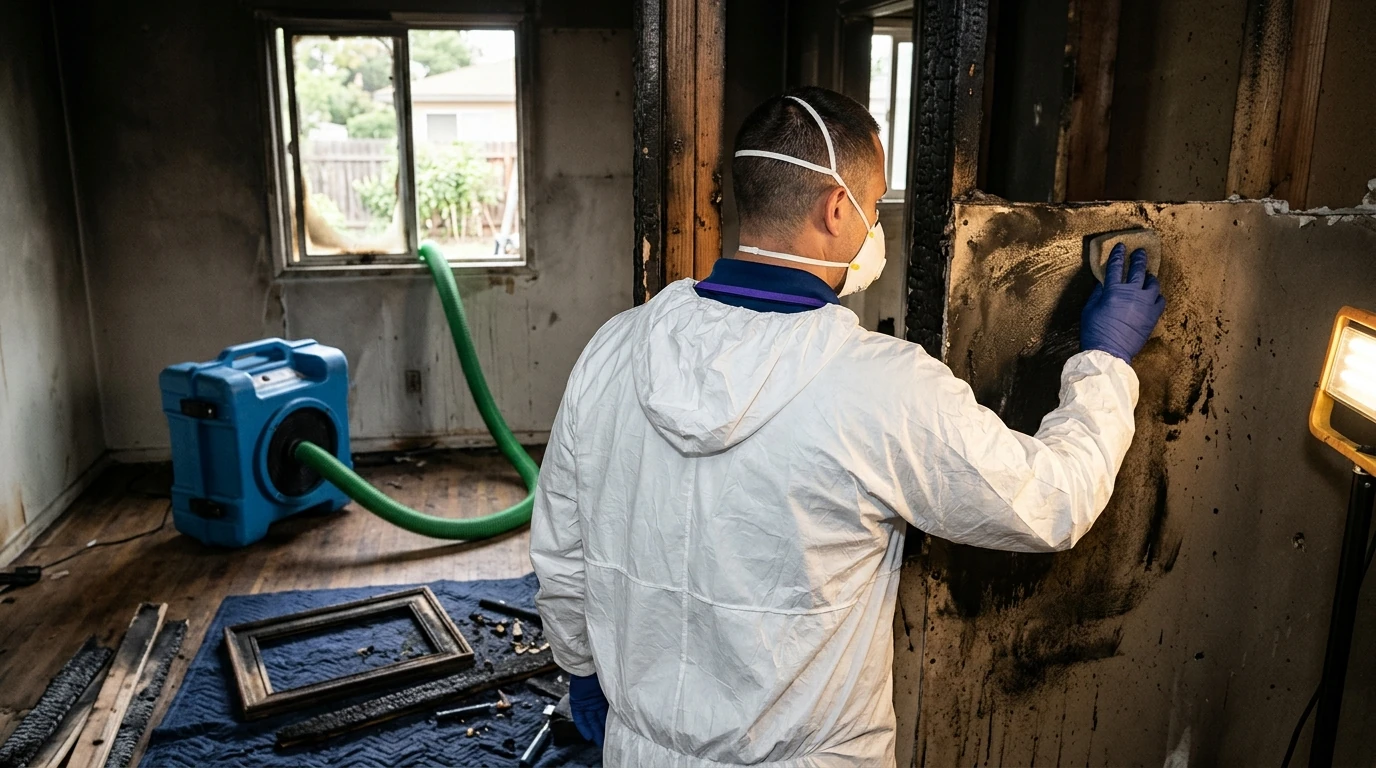
In practice that breaks into phases: securing the structure (boarding broken windows, tarping a burned roof section), assessing which materials are salvageable versus which need to come out, cleaning soot from surfaces and contents, running HEPA air scrubbers to pull particulate out of the air, treating odor at the molecular level, and finally rebuilding anything that was removed. Our fire damage restoration process guide walks through each phase in more detail if you want the full sequence.
Soot cleaning isn’t one method. Protein residue from a kitchen grease fire wipes differently than the dry, powdery soot from a synthetic-materials fire, and using the wrong cleaning agent can set a stain instead of lifting it. That’s why the assessment phase matters: it determines the cleaning chemistry before anyone touches a wall.
How soon do you need to start fire and smoke restoration after a fire?
You need restoration to start within 24 to 48 hours of the fire department clearing the structure, because soot becomes more acidic and harder to remove the longer it sits. Left untreated, soot etches metal fixtures, yellows grout, and corrodes glass and chrome within days.
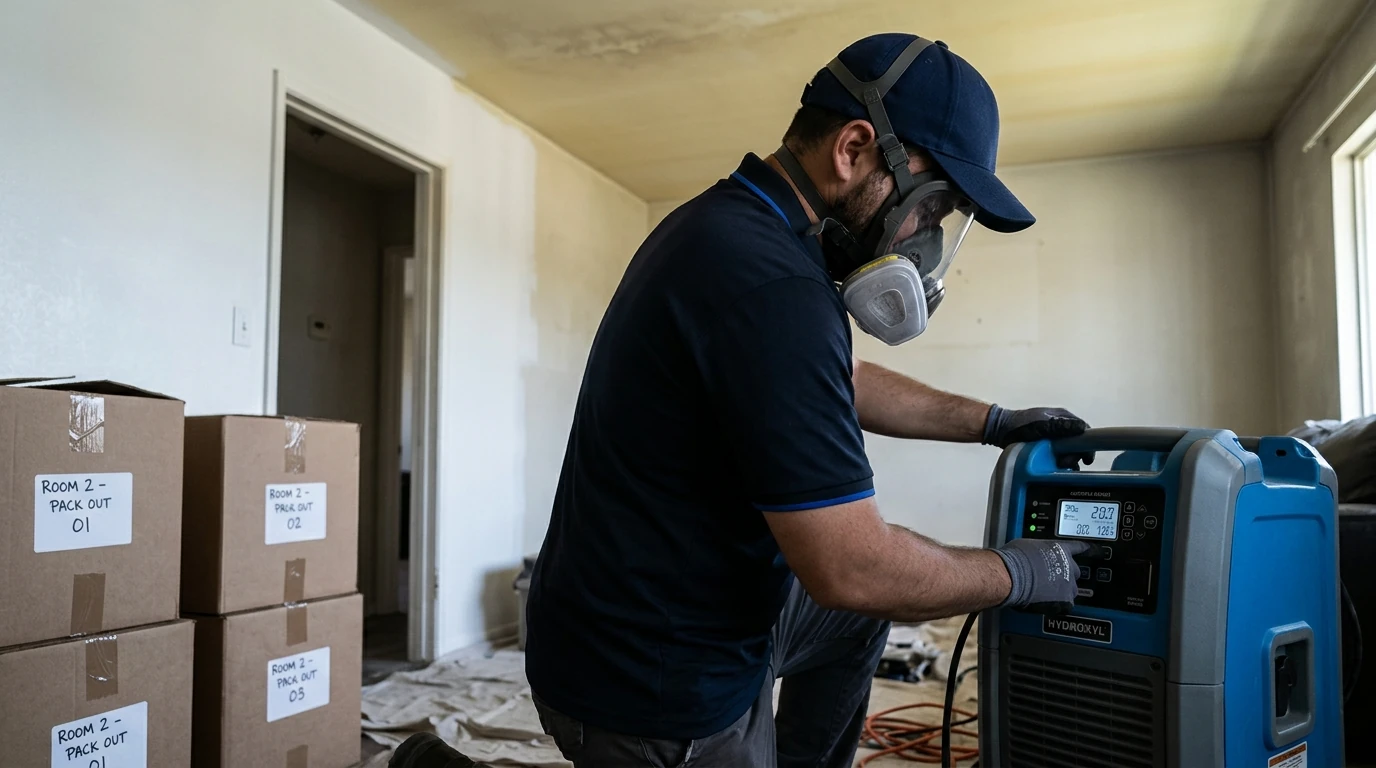
Smoke odor behaves the same way. It’s not sitting on the surface, it’s being absorbed into drywall, insulation, carpet padding, and wood framing. The longer those materials hold the odor, the deeper the smell gets and the more aggressive the eventual treatment has to be, sometimes the difference between a hydroxyl generator cycle and tearing out drywall. Fast containment and drying also matter for a second reason: wet firefighting water sitting in a structure for more than a day or two creates mold risk on top of everything else.
Why does fire damage show up differently than a straightforward house fire?
Smoke and soot damage from a nearby wildfire is a real and separate restoration scenario from a structure fire inside your own walls, and it needs the same odor and air-quality treatment even though nothing in your home burned. Central Valley temperature inversions trap wildfire smoke low in the air basin for days at a time, and that smoke works its way into attics, HVAC returns, and soft furnishings through normal air exchange.
The cleanup looks similar to post-fire smoke work, HEPA air scrubbing, surface cleaning, odor neutralization, duct cleaning when infiltration was heavy, but without the structural damage or board-up step a kitchen or electrical fire requires. If your home smells like smoke after a bad air-quality week and nothing actually burned, that’s still a smoke damage restoration call, not something an air freshener solves. The EPA’s guidance on wildfires and indoor air quality covers why infiltrated smoke particulate behaves differently than outdoor smoke you can just wait out.
Does homeowners insurance cover this, and who should you call first?
Most homeowners policies cover fire and smoke damage as a named peril, including the cleanup, contents restoration, and temporary repairs needed to secure the property, though coverage details and depreciation schedules vary by policy. The Insurance Information Institute’s guide to homeowners coverage is a good starting point for understanding what a standard policy typically includes.
After the fire department releases the property, call your insurance carrier to open the claim, then call a licensed fire and smoke restoration company before a general contractor. The restoration company handles emergency board-up, documents the loss with photos and moisture readings for the adjuster, and starts mitigation on a timeline that protects the claim. We cover the full call order in who to call after a house fire in Fresno. Grizzly Restoration answers that call 24/7, carries IICRC FSRT (fire and smoke) and OCT (odor control) certification, and can have a tech on-site to begin board-up and documentation before the adjuster even calls back.
Getting a written scope of work before anything is torn out protects you either way. Costs vary widely by square footage and smoke type, our fire damage restoration cost guide for Fresno breaks down typical ranges for light smoke cleaning versus a full structural rebuild.
A fire doesn’t end when the flames go out. The restoration work that follows, done in the right order and on the right timeline, is what actually determines whether your home ends up back to normal or carrying a smoke smell for years.
About Grizzly Restoration
Grizzly Restoration employs IICRC-certified technicians serving Fresno, CA and surrounding Central Valley communities since 2023, holding California contractor license #1107432 (verify at the CSLB license lookup). Their crews hold IICRC FSRT (fire and smoke), AMRT (mold), WRT and ASD (water) certifications and respond 24/7 to fire, smoke, water, mold, and storm losses across Fresno, Clovis, Sanger, Selma, and the surrounding region.
Need help now? Call Grizzly Restoration at (559) 417-5369.
Video Transcript
A kitchen fire just went out, or wildfire smoke drifted into your attic and now every room smells like a campfire. Fire and smoke restoration isn’t one task. It’s a sequence, and skipping steps leaves soot ground into fabric or odor that never leaves. Restoration covers board-up, soot removal, air scrubbing, odor neutralization, and rebuilding anything that was damaged or removed. Soot isn’t cleaned with one method. Grease fire residue and synthetic-material soot each need different chemistry, or the stain sets permanently. Start within 24 to 48 hours. Soot grows more acidic daily, etching metal, yellowing grout, and corroding glass and chrome. Smoke odor keeps soaking into drywall, insulation, and carpet padding. The longer it sits, the deeper the smell and the bigger the repair. Central Valley inversions trap wildfire smoke for days, and it seeps into attics, HVAC returns, and furniture through normal airflow. Nothing burned, but the smell is real. That still calls for HEPA scrubbing, surface cleaning, and odor neutralization, not an air freshener. Most homeowners policies cover fire and smoke damage, though coverage and depreciation vary by policy. Documentation helps support your claim. Call your insurer first, then a licensed restoration company before a contractor. Call Grizzly Restoration at (559) 417-5369 to schedule an assessment.